

Putting the Conversation Before the Credit Card
How Varsity Tutors went from sales-first to human-first, and became the #1 live online tutoring platform in the U.S.
Putting the Conversation Before the Credit Card
How Varsity Tutors went from sales-first to human-first, and became the #1 live online tutoring platform in the U.S.
Putting the Conversation Before the Credit Card
How Varsity Tutors went from sales-first to human-first, and became the #1 live online tutoring platform in the U.S.
We didn't have a brand.
We had a collection of guesses.
The Problem
Varsity Tutors had a brand awareness problem. Less than 19% of people knew who we were. But the bigger issue wasn't visibility. It was voice. Everything sounded like a sales pitch. "Sign up now." "Limited time offer." The brand treated parents and students like transactions instead of people.
A parent searching for a tutor is worried about their kid falling behind. They're looking for someone who gets them. Our brand wasn't showing up that way. And without a unified voice, every team and channel had its own version of VT. It was disorganized chaos.
Listen first.
Then build something true.
The Approach
Before I wrote a single word of brand copy, I needed to understand what people actually thought about Varsity Tutors. I started with brand perception surveys and customer interviews. The insights were clear: people loved and trusted their tutors, but not the brand.
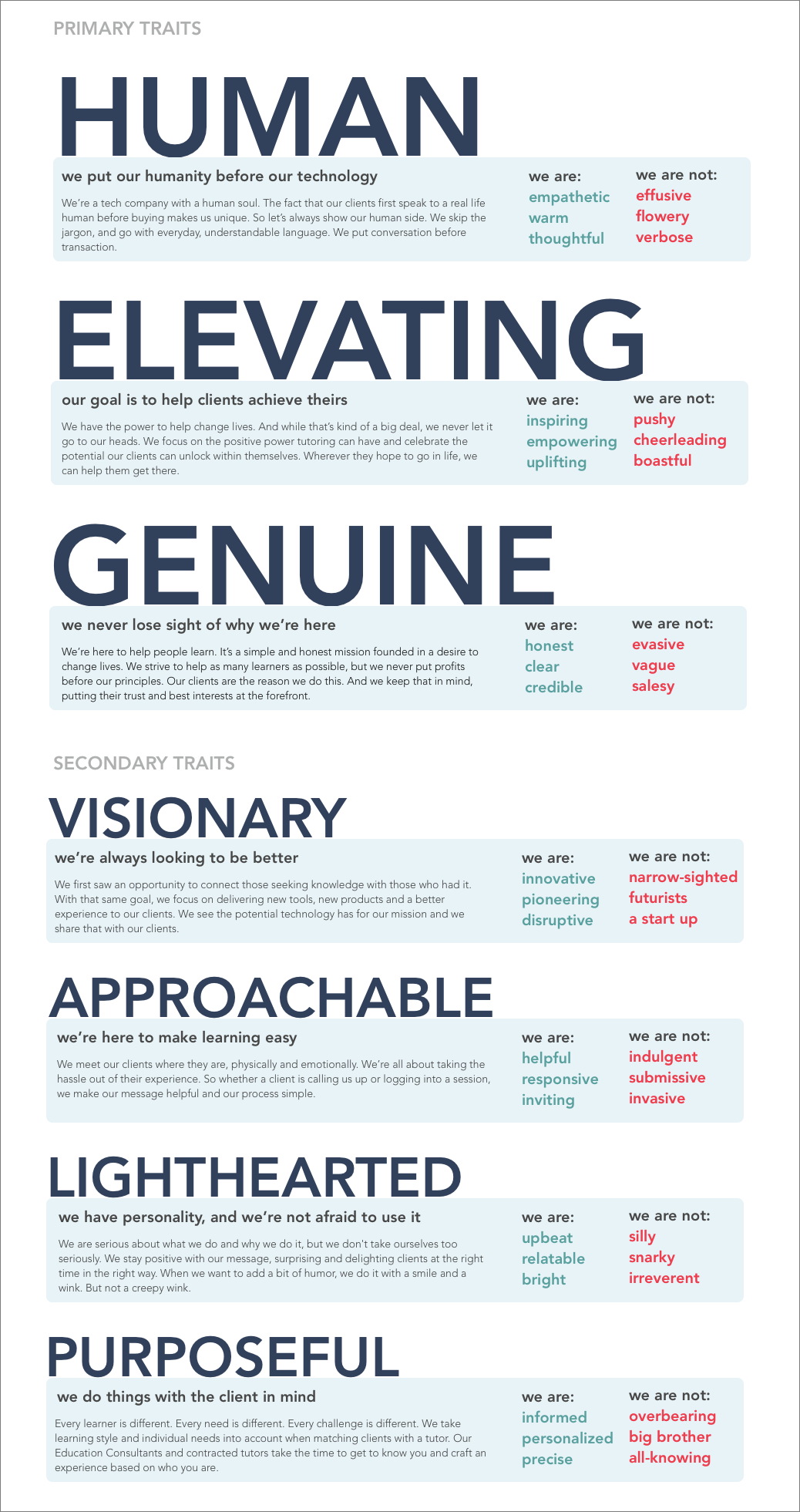
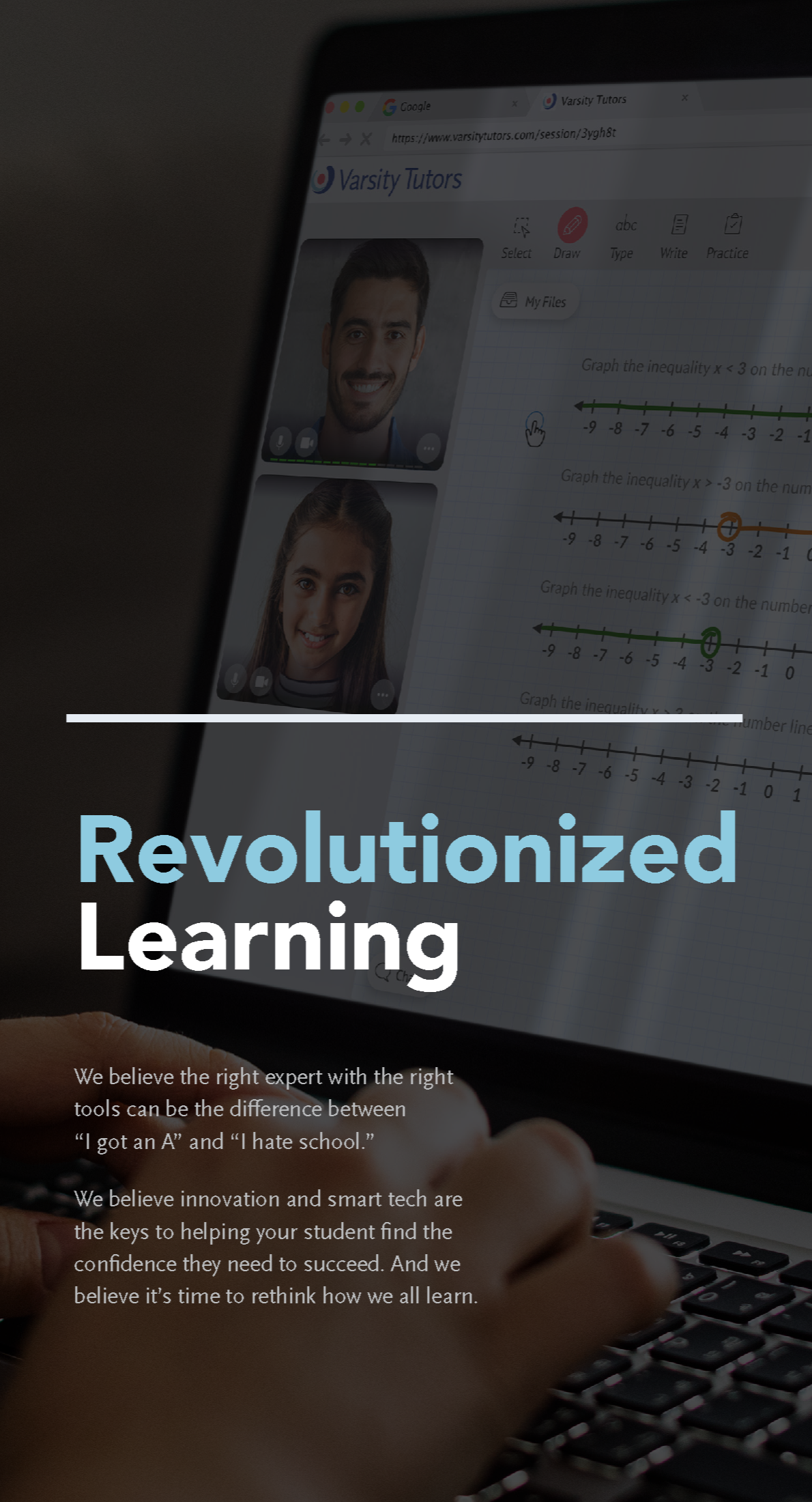
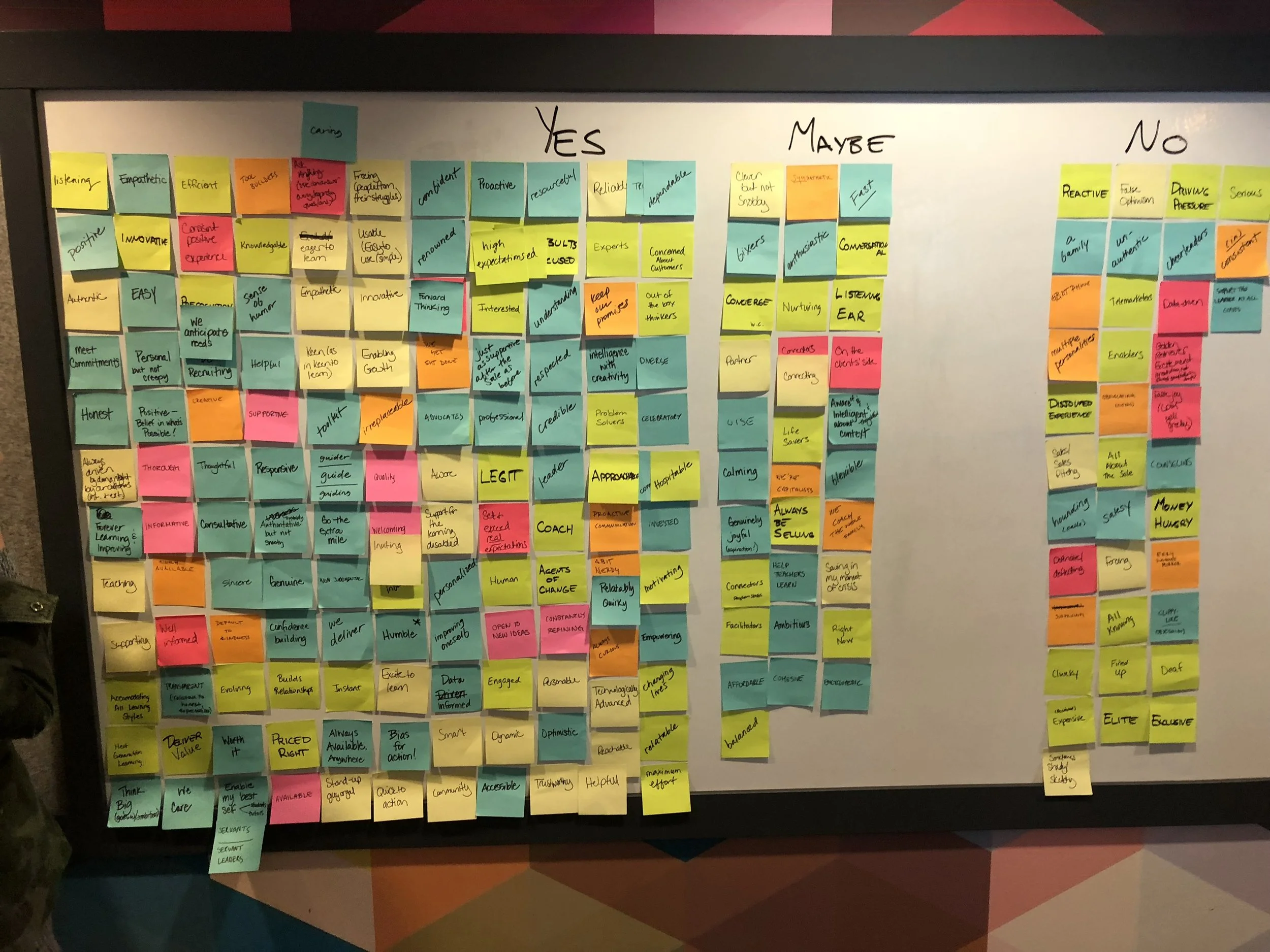
I facilitated cross-department workshops to align on what VT should feel like. Not what it should say. That distinction mattered. I then defined the core brand attributes and wrote a manifesto that reframed VT’s narrative around the learner instead of the service.
The Approach
Before I wrote a single word of brand copy, I needed to understand what people actually thought about Varsity Tutors. I started with brand perception surveys and customer interviews. The insights were clear: people loved and trusted their tutors, but not the brand.
I facilitated cross-department workshops to align on what VT should feel like. Not what it should say. That distinction mattered. I then defined the core brand attributes and wrote a manifesto that reframed VT’s narrative around the learner instead of the service.
Listen first.
Then build something true.
Brand Attributes
Manifesto (Abbreviated)
The Work
Same goal.
New voice.
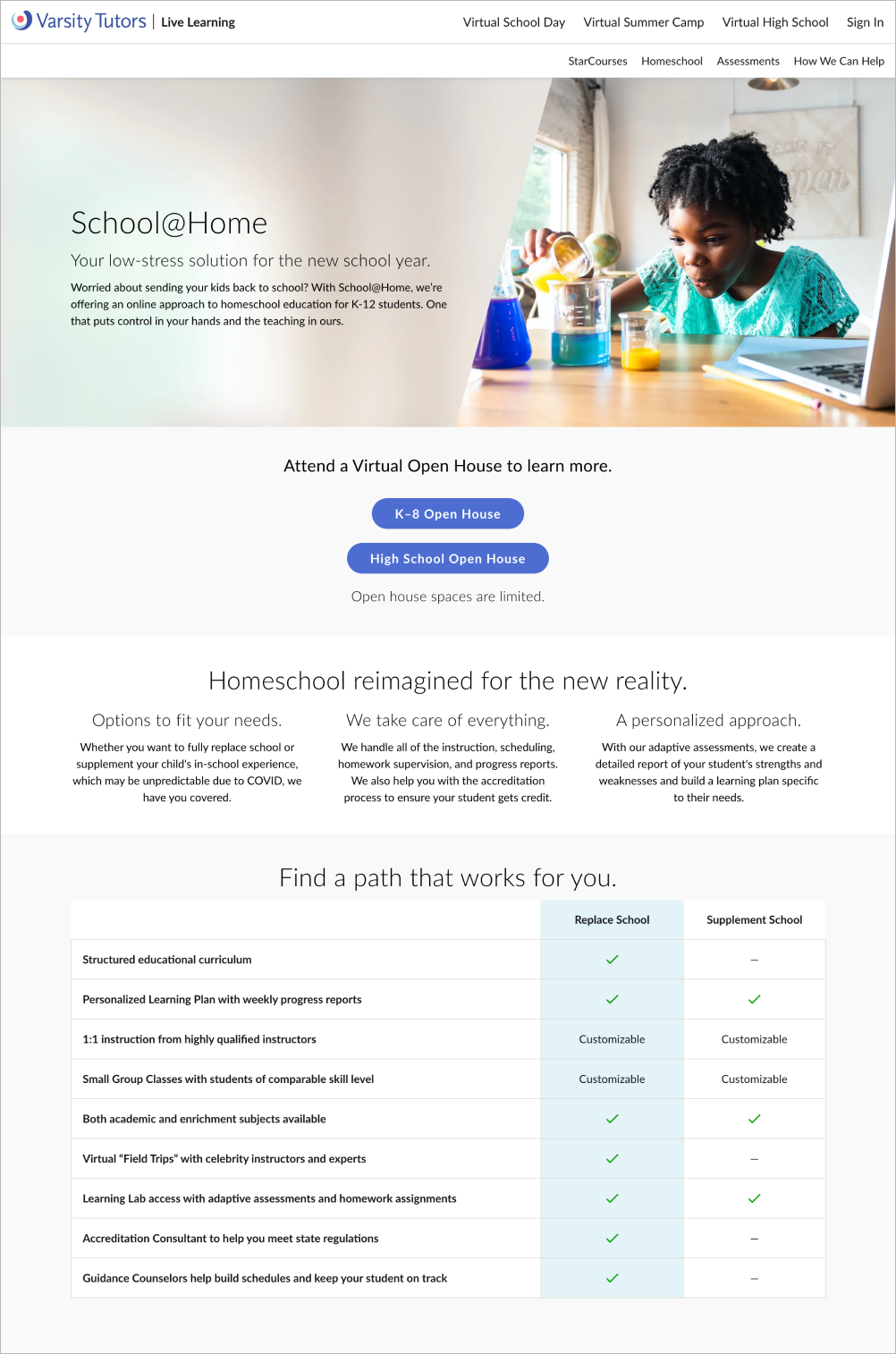
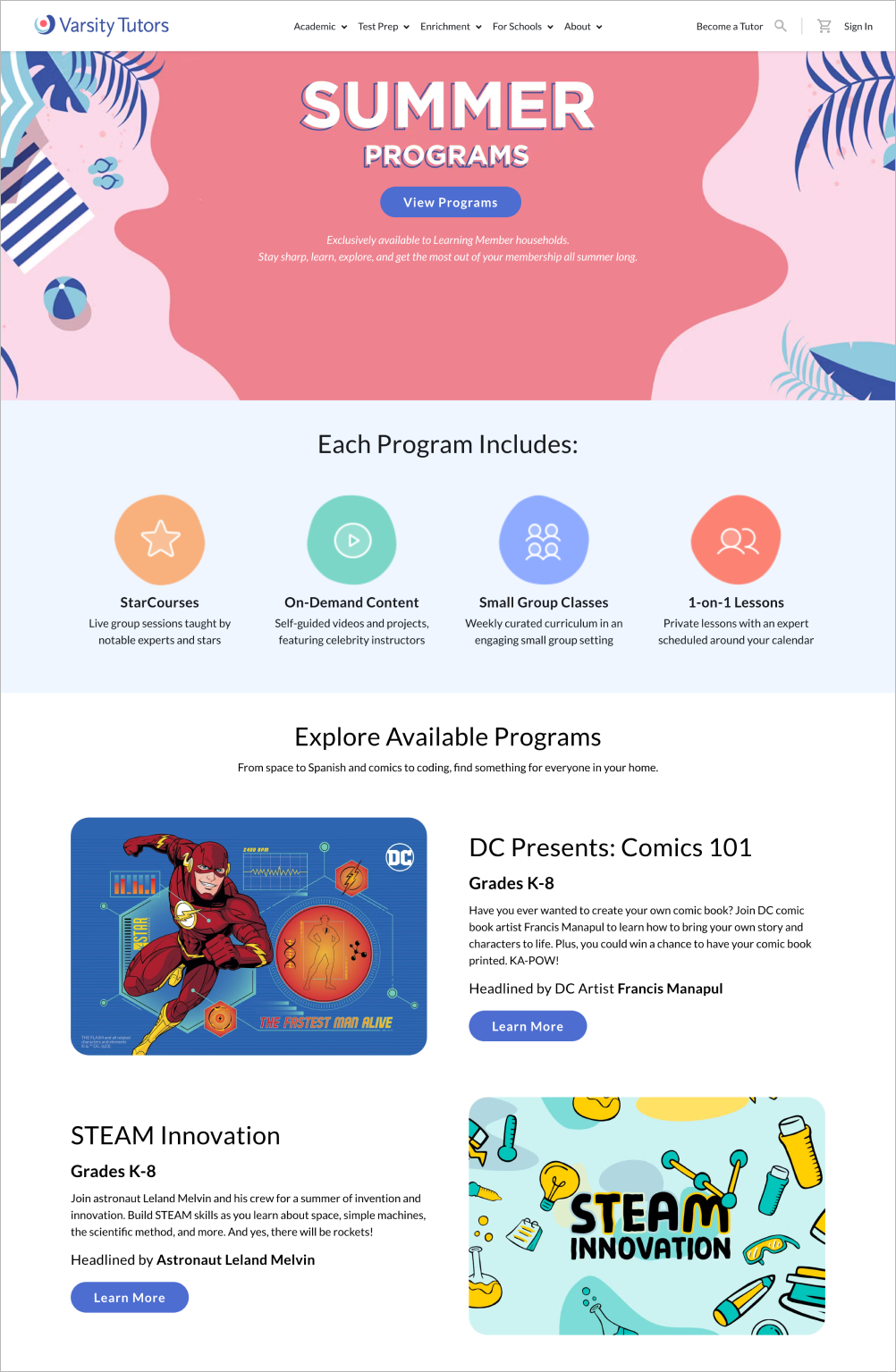
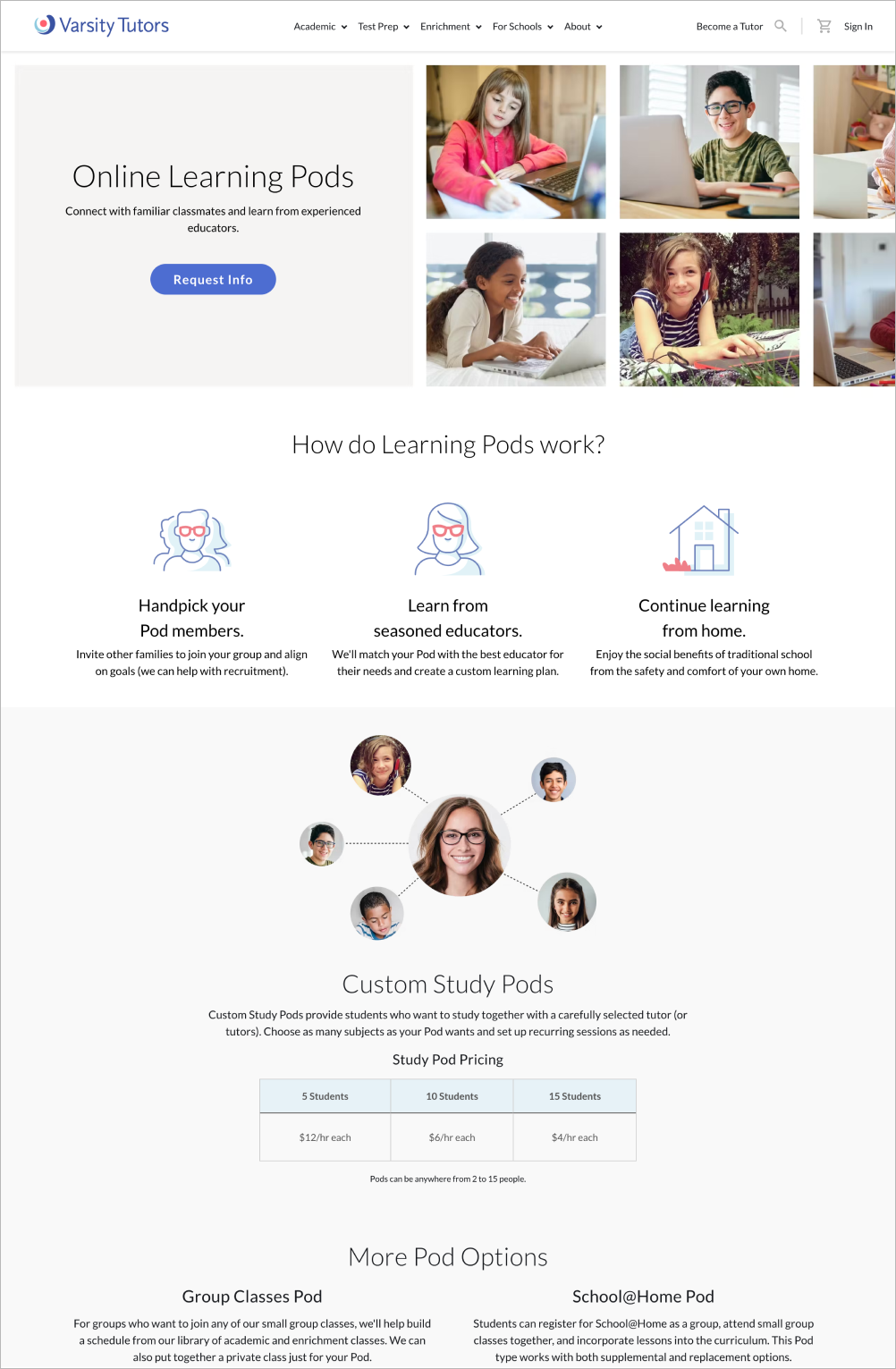
With leadership buy-in, I built brand guidelines to cover voice, tone, audience messaging, channel guidance, and style rules. I applied the new voice to every touchpoint. Web pages shifted from hard-sell to benefit-driven copy. TV spots focused on the joy of learning. The tone stayed consistent whether someone was reading an email seeing a social post.
The before-and-after tells the story. The old voice was transactional and impersonal. The new voice spoke to parents like people, addressing their very real concerns. It still drove conversion, but it started with connection.
Web Examples After Rebrand
TV Spots
Astronaut
From Our Clients“The mix of video, written content, and downloadable resources makes everything feel accessible and well-rounded.”

Listen first.
Then build something true.
The Approach
Before I wrote a single word of brand copy, I needed to understand what people actually thought about Varsity Tutors. I started with brand perception surveys and customer interviews. The insights were clear: people loved and trusted their tutors, but not the brand.
I facilitated cross-department workshops to align on what VT should feel like. Not what it should say. That distinction mattered. I then defined the core brand attributes and wrote a manifesto that reframed VT’s narrative around the learner instead of the service.
The Problem
Varsity Tutors had a brand awareness problem. Less than 19% of people knew who we were. But the bigger issue wasn’t visibility. It was voice. Everything sounded like a sales pitch. “Sign up now.” “Limited time offer.” The brand treated parents and students like transactions instead of people.
Education runs on trust, not urgency. A parent searching for a tutor is worried about their kid falling behind. They’re looking for someone who gets it. Someone who can help them get results. Our brand wasn’t showing up that way. And without a unified voice, every team and channel had its own version of VT. We didn’t have a brand. We had a collection of guesses.
The Approach
Before I wrote a single word of brand copy, I needed to understand what people actually thought about Varsity Tutors. I started by listening. Brand perception surveys. Customer interviews. The answers were clear: people loved their tutors. They trusted the people, not the brand. The human connection was already there. The brand just hadn't caught up.
I facilitated cross-department workshops to align on what VT should feel like. Not what it should say. That distinction mattered. From those insights, I built brand guidelines on ZeroHeight: voice, tone, audience messaging, channel guidance, and style rules. All designed to answer one question: "How would a thoughtful, empathetic human say this?"
The Work
With leadership buy-in, I built brand guidelines: voice, tone, audience messaging, channel guidance, and style rules. I applied the new voice to every touchpoint. Web pages shifted from hard-sell to benefit-driven copy. TV spots told human stories. The tone stayed consistent whether someone was reading an email seeing a social post.
The before-and-after tells the story. The old voice was transactional and impersonal. The new voice spoke to parents like people, addressing their very real concerns. It still drove conversion, but it started with connection.
The Problem
Varsity Tutors had a brand awareness problem. Less than 19% of people knew who we were. But the bigger issue wasn’t visibility. It was voice. Everything sounded like a sales pitch. “Sign up now.” “Limited time offer.” The brand treated parents and students like transactions instead of people.
Education runs on trust, not urgency. A parent searching for a tutor is worried about their kid falling behind. They’re looking for someone who gets it. Someone who can help them get results. Our brand wasn’t showing up that way. And without a unified voice, every team and channel had its own version of VT. We didn’t have a brand. We had a collection of guesses.
The Approach
Before I wrote a single word of brand copy, I needed to understand what people actually thought about Varsity Tutors. I started by listening. Brand perception surveys. Customer interviews. The answers were clear: people loved their tutors. They trusted the people, not the brand. The human connection was already there. The brand just hadn't caught up.
I facilitated cross-department workshops to align on what VT should feel like. Not what it should say. That distinction mattered. From those insights, I built brand guidelines: voice, tone, audience messaging, channel guidance, and style rules. All designed to answer one question: "How would a thoughtful, empathetic human say this?"
The Work
I defined the core brand attributes, wrote a manifesto that reframed VT’s narrative around the learner instead of the service, and applied the new voice across every touchpoint. Web pages shifted from hard-sell CTAs to empathetic, benefit-driven copy. TV spots told human stories instead of rattling off features. The tone stayed consistent whether someone was reading an email, watching a commercial, or browsing the homepage.
The Problem
Varsity Tutors had a brand awareness problem. Less than 19% of people knew who we were. But the bigger issue wasn’t visibility. It was voice. Everything sounded like a sales pitch. “Sign up now.” “Limited time offer.” The brand treated parents and students like transactions instead of people.
A parent searching for a tutor is worried about their kid falling behind. They’re looking for someone who gets them. Our brand wasn’t showing up that way. And without a unified voice, every team and channel had its own version of VT. We didn’t have a brand. We had a collection of guesses.
The Approach
Before I wrote a single word of brand copy, I needed to understand what people actually thought about Varsity Tutors. I started with brand perception surveys and customer interviews. The insights were clear: people loved and trusted their tutors, but not the brand.
I facilitated cross-department workshops to align on what VT should feel like. Not what it should say. That distinction mattered. I then defined the core brand attributes and wrote a manifesto that reframed VT’s narrative around the learner instead of the service.
The Work
With leadership buy-in, I built brand guidelines: voice, tone, audience messaging, channel guidance, and style rules. I applied the new voice to every touchpoint. Web pages shifted from hard-sell to benefit-driven copy. TV spots told human stories. The tone stayed consistent whether someone was reading an email seeing a social post.
The before-and-after tells the story. The old voice was transactional and impersonal. The new voice spoke to parents like people, addressing their very real concerns. It still drove conversion, but it started with connection.